The main components of atmospheric air are nitrogen (~78.08%) and oxygen (~20.95%).
In smaller amounts it contains noble gases (argon, neon, krypton, xenon), carbon dioxide, carbon monoxide (carbonous oxide), and other impurities.
Depending on its intended use, oxygen is supplied in the following types:
Technical oxygen – 99.5–99.7% O₂
Medical oxygen – 99.5% O₂
Process oxygen – 99.5–92% O₂ and lower.
The specifications for technical and medical oxygen are regulated by GOST 5583–78.
Oxygen produced by cryogenic oxygen plants is widely used in:
The main advantages of using cryogenic units:
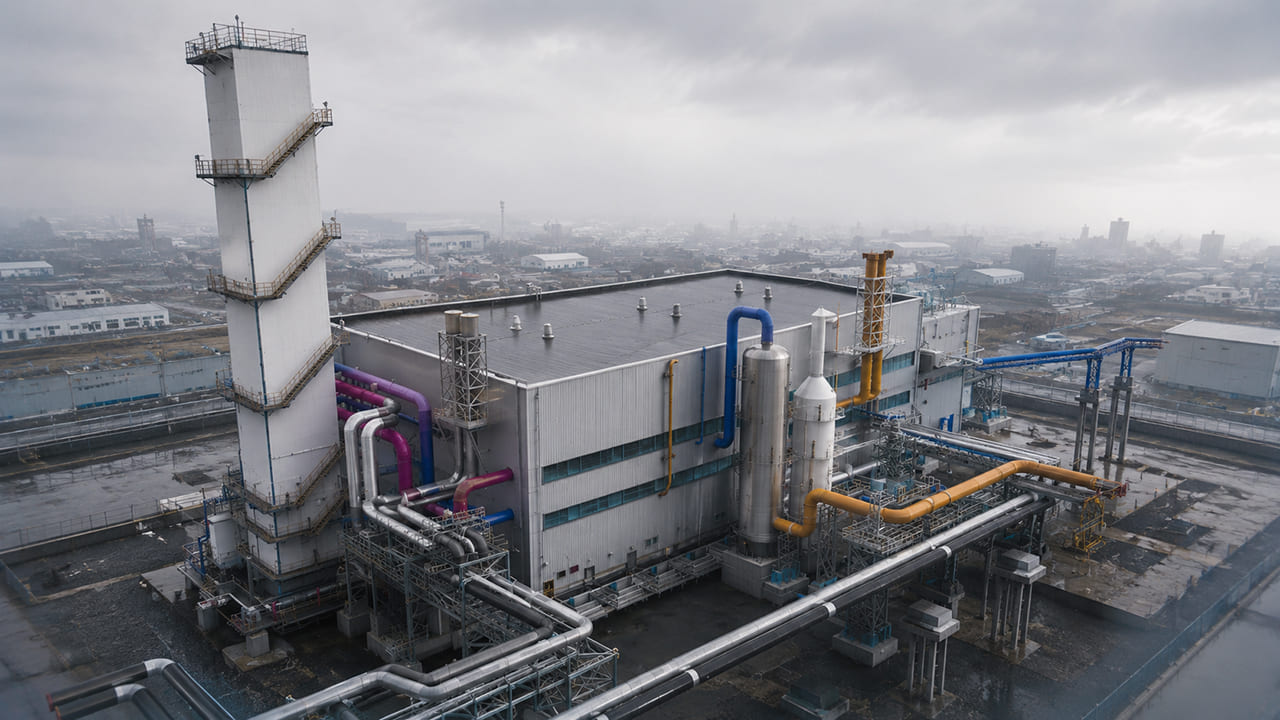
The technological process for producing high-purity oxygen is based on cryogenic rectification of air and is implemented using air separation units (ASUs). The process consists of several stages, during which the following operations are carried out:
The resulting gaseous oxygen is fed into gas holders and cylinders, and also supplied to the end user via a gas pipeline. Liquid oxygen is sent to tanks and containers for storage or transportation.
The unit is adapted to the conditions and requirements of metallurgical plants: high equipment reliability, long operating campaign, a wide range of capacity control, and the ability to operate in areas with elevated air contamination.
The equipment complies with safety requirements for both the environment and operating personnel.
LLC RusGazKrio, the official dealer of Hangzhou Oxygen Plant Group, offers cryogenic equipment, including oxygen production plants, with subsequent installation and commissioning at the customer’s production site.
The unit capacity ranges from 10,000 to 120,000 Nm³/h, with oxygen purity from 99.5% to 99.9% vol.
At our production site in Krasnodar, an automated control system is developed in accordance with the customer’s technical specifications.
You can submit a request for a project calculation on our company’s website.
LLC RusGazKrio is a certified Siemens system integrator.
Our specialists design, manufacture, supply, deliver and commission air separation units (ASUs) in Moscow, as well as at industrial plants across Russia and CIS countries.
The equipment is adapted to the conditions of each specific production facility, with all required preliminary preparation carried out in advance.